Pick by the problem you want next: factory layout, logistics scale, pressure, colony survival, or puzzle density.
The broad Games Like Factorio page is the canonical similarity page. This guide is narrower: what should you play after Factorio when the thing you miss is the logistics problem itself?
That answer changes fast. Some players want belts and ratios. Some want a taller factory with friends. Some want production chains across planets. Some want the base to matter because enemies, colonists, heat, water, or oxygen keep breaking the clean plan.
Start With The Kind Of Problem You Want
Do not start by asking which game is "most like Factorio." That usually returns a list of factory games without telling you whether the fun is layout, scale, survival pressure, or optimization.
Start with Satisfactory if you want the safest next factory project. Move to Dyson Sphere Program if the exciting part is supply across absurd distance. Pick shapez only if you want the logistics problem with almost everything else stripped away.
If Factorio worked because of...
Play first
Why
Belts, manifolds, machines, and a huge build space
Spatial factory puzzles for players who want hard layouts more than a forever base.
If You Want The Big Factory Feeling
This is the lane for players who want belts, pipes, machines, power problems, and a base that keeps getting uglier before it gets better. The tradeoff is readability: once the factory becomes physical and vertical, you lose some of Factorio's clean top-down control.
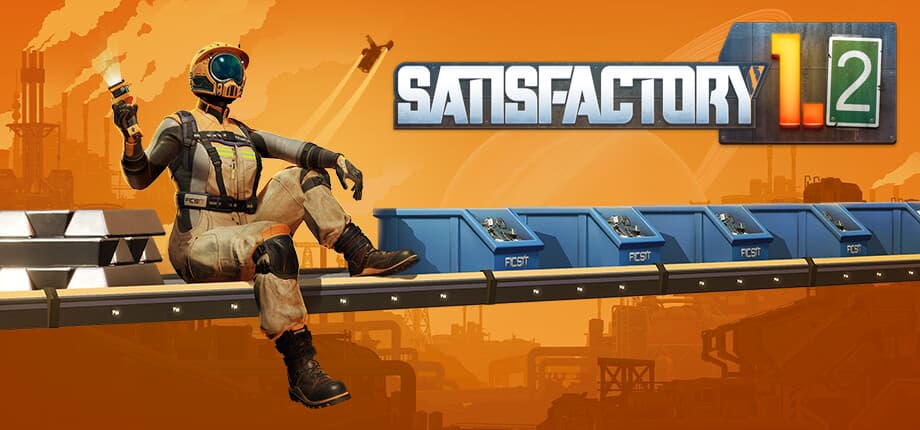
Satisfactory is the easy first stop if you want belts, machines, power, pipes, exploration, and co-op factory sprawl in a 3D world.
Factorio players who want factory sprawl, belts, pipes, exploration, and co-op.
Why it fits
It keeps the core pleasure of extending production, finding bottlenecks, building transport, and watching a messy factory become intentional. The difference is perspective: you are inside the factory, climbing around it, routing belts through terrain, and expanding vertically.
Skip if
You want Factorio's compact top-down readability or blueprint-heavy precision more than a physical factory space.
A voxel factory builder with familiar belt-and-machine automation.
Why it fits
It is useful when you want the Satisfactory-style first-person factory idea but with a blockier build language and a stronger focus on digging, routing, and expanding through terrain.
Skip if
You want the most proven, content-rich pick first. Start with Satisfactory or Dyson Sphere Program before this.
If You Want Production Chains At A Bigger Scale
Pick this route when the fun was not one tidy bus, but watching a production chain stretch until local decisions became global problems. These games are slower to explain themselves than a pure belt puzzle, but they make logistics feel larger than one base.
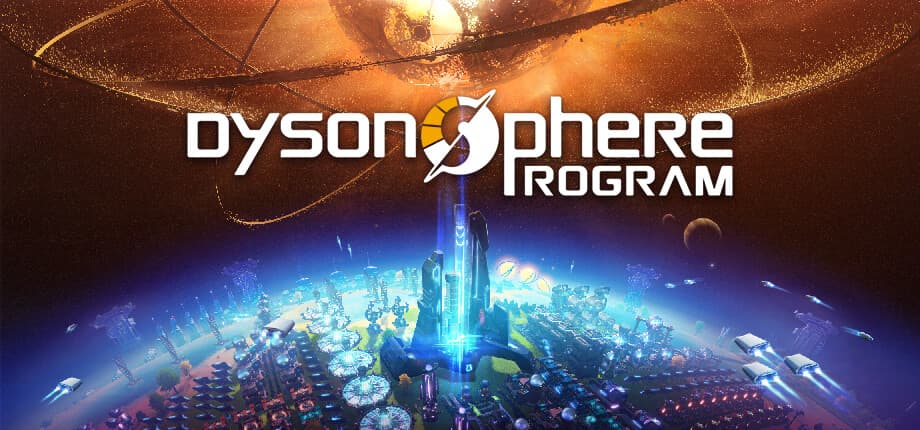
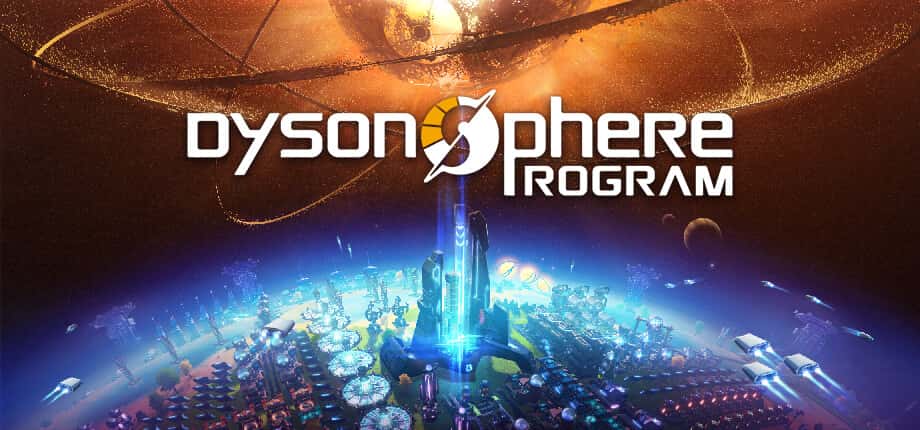
Dyson Sphere Program turns the factory problem into a planetary and interstellar logistics problem.
Players who want Factorio's production-chain planning, but larger and more cosmic.
Why it fits
The fun is moving from local ratios to planetary logistics: resources, belts, drones, interstellar supply, and the long climb toward enormous infrastructure. It is the strongest pick if Factorio made you enjoy throughput as a long-range planning problem.
Skip if
You want enemy pressure to keep forcing redesigns. This is more about scale and flow than defending every wall.
Players who want heavy industrial chains with mining, refining, shipping, and painful shortages.
Why it fits
It feels less elegant than Factorio on purpose. Terrain, waste, fuel, logistics, and population needs make the supply chain feel physical and brittle. Pick it when you want industry, not just clean automation.
Skip if
You want quick expansion and tidy belt logic. This is slower and harsher.
If You Want Belts Without The Survival Wrapper
This is the cleanest answer for players who searched for games like Factorio but really meant "give me throughput puzzles." You give up the romance of a dangerous world and get a sharper test of routing, bottlenecks, and layout discipline.
It removes most of the world fiction and leaves the factory logic exposed: cut shapes, rotate pieces, paint outputs, merge flows, and keep throughput moving. That makes it a good second game when Factorio's best moments were solving local layout puzzles.
Skip if
You need mining, enemies, pollution, trains, or a base that feels like a place.
Automation through little programmed workers instead of belts.
Why it fits
The interesting part is teaching bots routines, then watching the labor system scale. It scratches a different automation itch: less factory math, more process design.
Skip if
You want machines, belts, and industrial sprawl. The cute presentation and scripting rhythm are the point.
If You Want Pressure On The Factory
Go here if peaceful optimization gets boring once the ratios are solved. These picks make the factory answer to enemies, colonists, heat, gas, or human chaos, so the correct design is the one that survives contact with the next problem.
Mindustry makes the logistics network matter because every belt, drill, and turret is part of a defense plan.
Belts feed turrets, power, walls, and production while waves punish bad routing. If you liked Factorio's base-defense side and want more of that pressure, Mindustry is the cleanest answer.
Skip if
You mostly played Factorio on peaceful settings and hated rebuilding under attack.
Automation where survival systems keep exposing bad design.
Why it fits
The machines are only part of the problem. Heat, gas, germs, labor, food, stress, and plumbing all push back. It is not a factory clone, but it is excellent for players who loved debugging systems that fail in weird chained ways.
Skip if
You want belts and production ratios more than colony management.
RimWorld is not about building an elegant factory. It belongs here because labor, storage, crafting, power, food, medicine, raids, and colonist behavior create constant systems problems. Pick it if Factorio made you enjoy the part where the plan meets chaos.
Skip if
You want deterministic automation. RimWorld will happily make one bad mood break the whole day.
If You Want Colony Logistics Instead Of Belts
Colony logistics are messier than factory logistics because people, water, food, sleep, storage, and timing become part of the machine. Choose this lane if you want systems to fail in chains instead of just seeing one belt back up.
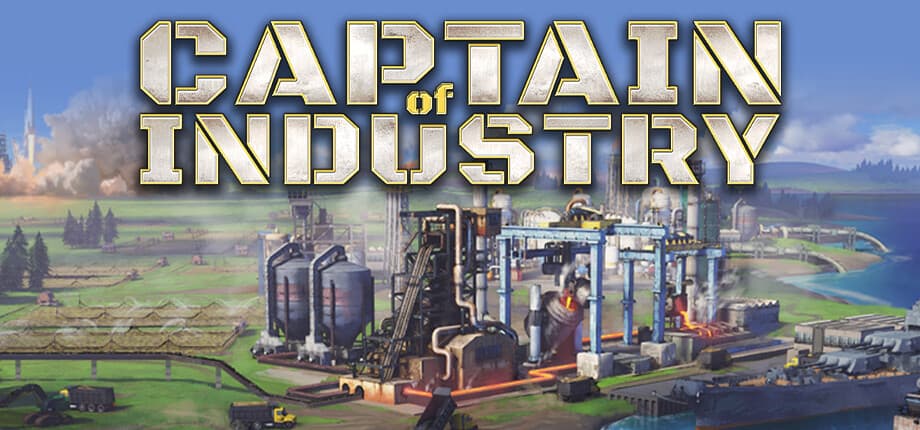
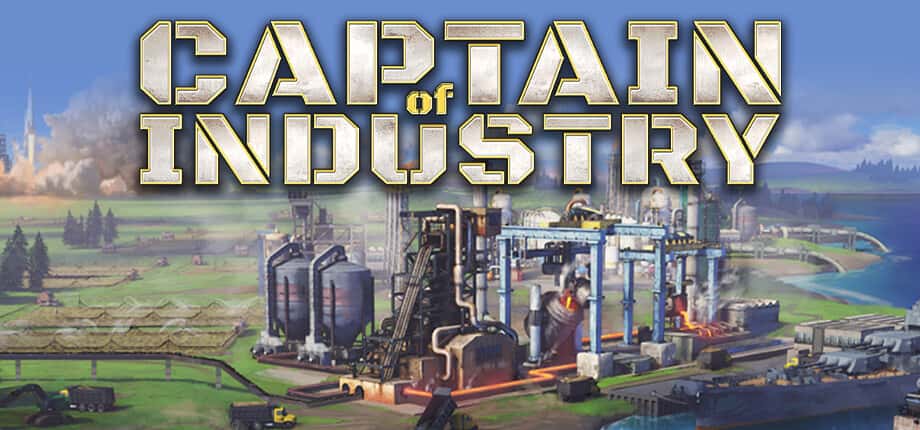
Captain of Industry is slower and heavier: mining, refining, transport, power, waste, and population needs all fight for space.
Colony logistics with water, districts, droughts, and production chains.
Why it fits
It replaces Factorio's alien factory problem with a city-builder logistics problem. Water storage, worker routes, food, power, and district planning matter because the colony lives or dies by them.
Skip if
You want machinery and belts to be the star.
If You Want Dense Logistics Puzzles
This is the smallest but sharpest lane. The appeal is not a forever base; it is one constrained machine, one ugly solution, and the immediate itch to rebuild it cleaner.
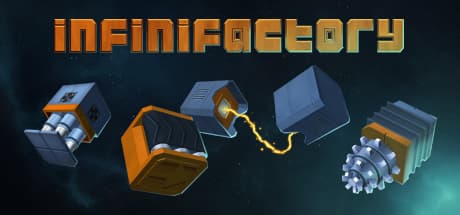
It takes the joy of arranging production and turns it into handcrafted 3D puzzle rooms. The constraint is not a sprawling map; it is making one ugly machine solve the level cleanly enough.
Skip if
You want open-ended base growth and resource extraction.
It is about designing a mechanism, watching it run, then hating it enough to make it cleaner. Factorio players who enjoy compact layouts, throughput, and self-imposed optimization should try it.
It is older and harsher, but still useful for the player who wants programmable process design more than base building. Expect brain strain, not cozy expansion.
Skip if
You want approachability or modern presentation.
The Co-op Shortlist
If co-op is the deciding factor, start with Satisfactory. It is the strongest shared factory project here because the 3D space gives every player something physical to build, explore, fix, or overcomplicate.
Mindustry is better when the group wants pressure and shorter tactical loops. Dyson Sphere Program is the better single-player logistics obsession, not the first co-op answer.
The Wrong Default Is Any Factory Game With Belts
Belts are not enough. A game can have conveyors and still miss the reason Factorio works: the pleasure of tracing a failure back through the system and fixing the cause instead of the symptom.
If you want that debugging loop, start with Satisfactory, Dyson Sphere Program, Mindustry, or Oxygen Not Included. If you only want the compact layout problem, shapez and Opus Magnum are better than a bigger sandbox. If you want another survival game that happens to have automation, you are probably in the wrong guide.
Canonical GamesLike Pages
Use these when you want the broader recommendation graph instead of this editorial split:
Play Satisfactory if you want the safest next factory game,
especially with co-op.
Play Dyson Sphere Program if scale, interplanetary supply,
and long-range logistics sound better than combat.
Play shapez if you want pure belts and throughput without
survival friction.
Play Mindustry if the factory should be under attack.
Play Oxygen Not Included if you want system failures from
heat, gases, labor, and survival instead of biters.
Play Captain of Industry if you want heavy industry to feel
heavy.
Play Infinifactory or Opus Magnum if the layout puzzle
matters more than the base.
Pick the row that matches the problem you want to solve tonight. Factorio fans split harder than the keyword suggests.
If you are still undecided, start with Satisfactory unless you already know you hate first-person building. It is the broadest next click for games like Factorio because it keeps the factory dream intact while making the scale feel new.
Play queue
Play these next
Hover for trailer media, then open the game page when one looks right.