
Which blacksmith games put you at the anvil?
A forge can be a place to shape a blade, organize a business, or decide whose orders deserve your time. These three PC smithing games give those jobs different weight. Choose by the work you want to spend a session doing: following a sword design through the forge, keeping materials and workers moving, or running a shop whose customers pull you into a story.
Manual crafting and management can overlap. Blacksmith Master lets you take direct control of forging as well as run production, so the useful distinction is where each game's wider systems put your attention.
Fantasy Blacksmith: follow a sword from drawing to grindstone
Fantasy Blacksmith
Recommendation
- Best for
- Players who want the blade-making process itself to be the main attraction.
- Why it fits
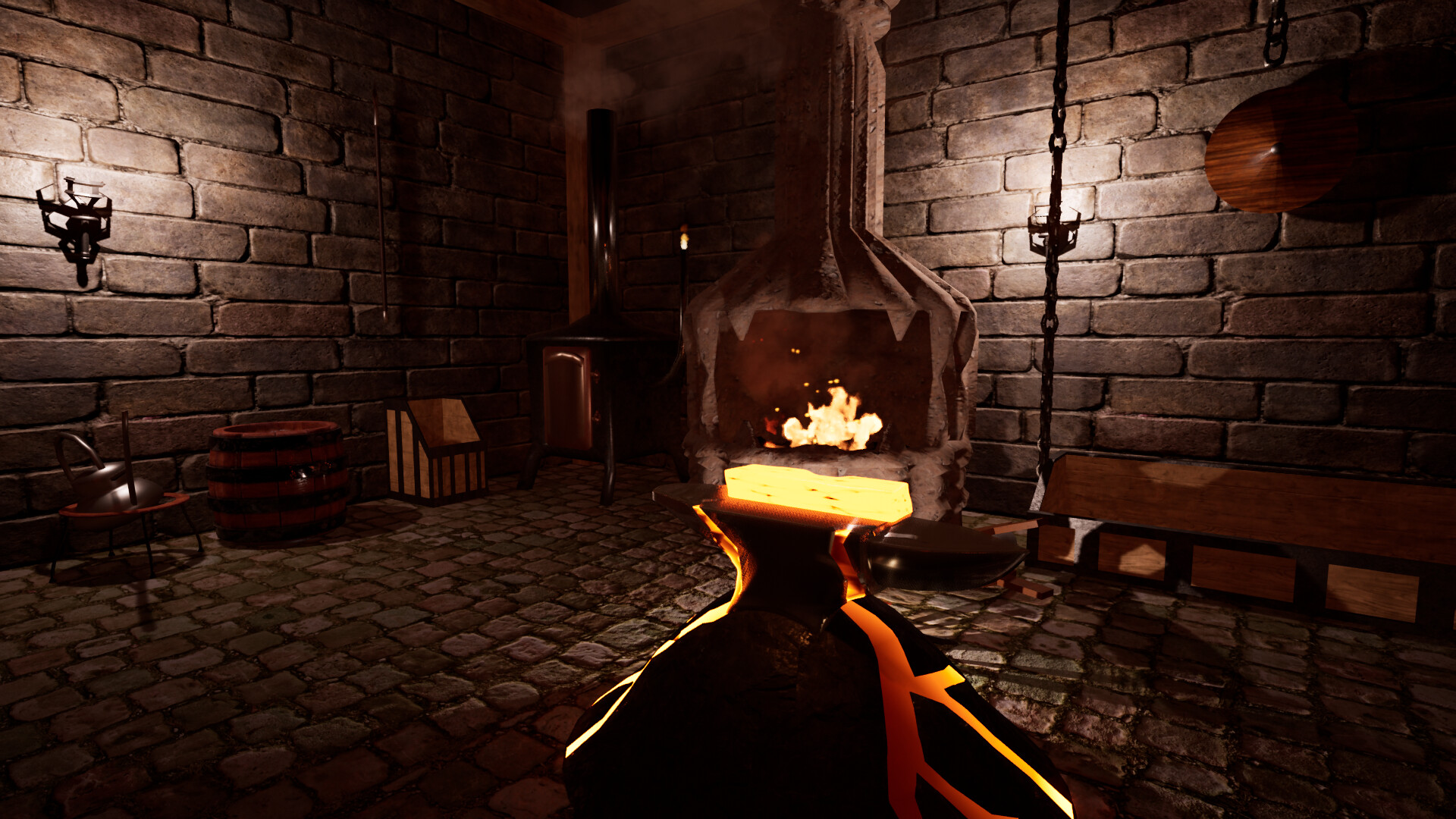
- You draw a sword, select its metal, hammer the heated ingot to match the design, and grind the blade.
- Skip if
- You mainly want to organize a workforce or make faction choices.
The drawing gives your hammering a target. Reheating the metal and moving to the grindstone keep the work tied to the object on the anvil. The sword also has separate parts, including its guard and handle, rather than ending with a shaped blade alone.
Mining and smelting supply the forge. Equipment upgrades include the hammer and grindstone. Damask-making and magical runes give the crafting a fantasy direction. Treat this as a fantasy blacksmith simulator rather than a lesson in historical smithing.
Blacksmith Master: build the business around the forge
Blacksmith Master
Recommendation
- Best for
- Players who want to connect resource gathering, workshop production, and retail.
- Why it fits
- Staff, shop layout, resource outposts, and orders all feed into the smithy's output.
- Skip if
- You want a finished-release purchase rather than an Early Access game.
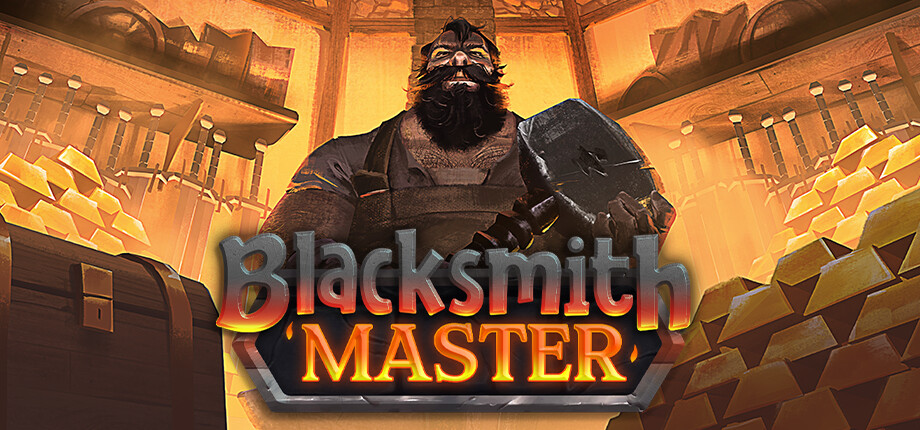
Blacksmith Master is in Early Access. Its appeal is the chain around each finished item: acquire resources, refine them, produce goods, then display and sell them. Hiring and training staff, arranging the workshop, and managing workers at mining and woodcutting outposts give you several places to improve that chain.
You can also step into the production work yourself. Optional direct forge control includes processes such as heating, hammering, tempering, assembly, and sharpening for more complex goods; simpler items need fewer steps. That makes this the choice for combining a growing smithy with hands-on work, rather than choosing between them.
The range of goods also broadens the business beyond swords, with armor, tools, and jewelry among its products. Choose it when deciding what the shop should make interests you as much as making one particular blade.

Anvil Saga: choose customers, look after workers, live with the consequences
Anvil Saga
Recommendation
- Best for
- Players who want a shop-management RPG shaped by workers and faction decisions.
- Why it fits
- Orders and relationships sit alongside staff needs, workshop expansion, and shop prestige.
- Skip if
- Your priority is first-person, detailed control over shaping a blade.
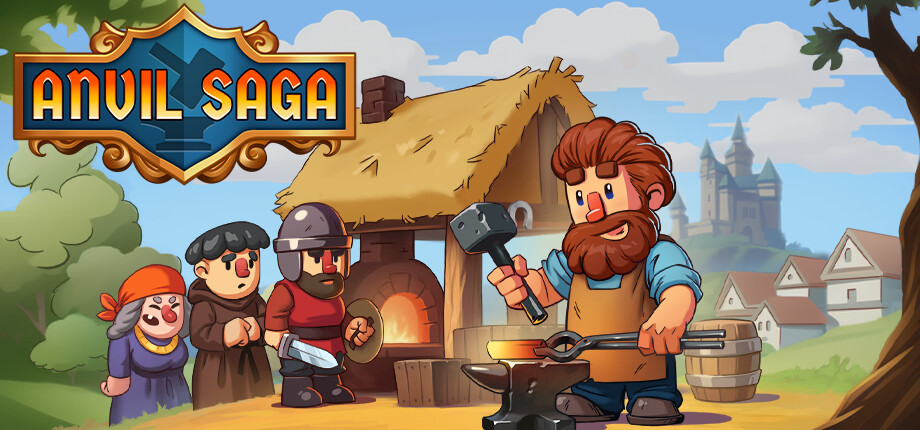
Anvil Saga gives customers interests beyond collecting their goods. Bandits, merchants, priests, and French and English soldiers bring competing demands. Faction choices carry consequences, so deciding whom to serve becomes part of running the shop.
Your workers need attention too. Skills, wages, needs, and personalities affect how you manage them. Expanding the building adds space for production and everyday facilities, including living quarters and a kitchen. Raising the shop's prestige opens access to wealthy customers and special orders.
The side-on pixel-art shop makes the building and its inhabitants the focus. Choose Anvil Saga for that mixture of business and role-playing, with the forge serving a story about the people who depend on it.

Play queue
Play these next
See game details, similar picks, and store options.

About the author

Alex Burlis
Founder of GamesLike
Alex Burlis founded GamesLike, a game discovery website that uses Steam game information and player feedback to find games with similar gameplay. Alex is editorially responsible for the GamesLike guides, which explain who each pick suits and the tradeoffs to expect.