
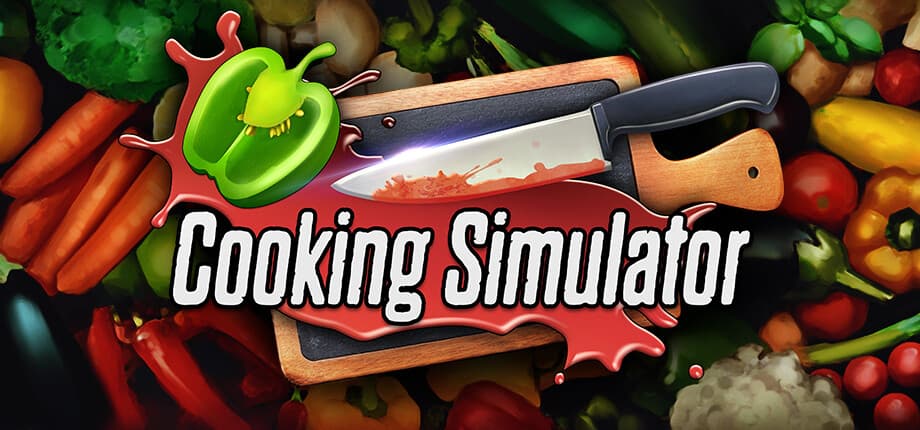
If you're browsing cooking games on Steam because you want to do the cooking yourself, start with Cooking Simulator. Its appeal is in the individual actions: cutting ingredients, pouring liquids, watching temperatures and trying to get food onto a plate. The physics are part of the job, so this is a recommendation for someone who wants to handle the tools, including the mess that can follow.
That leaves two different cravings. Chef Life: A Restaurant Simulator connects preparation to suppliers, staff and dinner service. Venba uses cooking puzzles to tell a South Indian family's story. Choose between experimenting, running a business and following a finite story before comparing how appetizing their screenshots look.
The useful distinction is what you want to do after finishing a dish. Try another technique? Keep a restaurant running? Find out what happens to the family? These three games give that moment different purposes.
Cooking games on Steam for hands-on kitchen experiments
Choose Cooking Simulator first if the process of making food is what brought you here. It offers Career and Sandbox modes, so you can pursue structured recipe progression or experiment with the tools and ingredients. You trade the simplicity of a cooking-themed task for direct responsibility over the objects on the counter.
Cooking Simulator
Recommendation
- Best for
- Players who want cutting, pouring and heating to be the main activity.
- Why it fits
- Physics-driven tools and ingredients give Career recipes and Sandbox experiments the same hands-on foundation.
- Skip if
- You want to coordinate a kitchen with friends, or would rather choose recipes than manipulate their ingredients.
Career supplies a reason to work on timing and consistency. Sandbox is the better starting point if you want to try an idea without making restaurant progression the goal. Neither choice removes the physical handling: spilling something or knocking it off the counter belongs to the same system as executing a dish carefully. That is the attraction to consider when comparing cooking simulator games, rather than treating realism as an automatic advantage.

This recommendation is for the original, single-player Cooking Simulator. Its Steam listing has separate paid DLC; the VR game and sequel are separate purchases too. For cooking games on PC, this is the most direct first click here if handling ingredients sounds more appealing than managing employees. The listed native platform is Windows.
Chef Life makes the meal part of running a restaurant
Start with Chef Life if cooking feels more rewarding when it serves a restaurant you've built. You'll still prepare and plate dishes, but choosing kitchen equipment, organizing staff, buying ingredients and tracking finances all compete for your attention. That wider responsibility is the reason to pick it over a kitchen sandbox.
Chef Life: A Restaurant Simulator
Recommendation
- Best for
- Players who want their menu, kitchen layout and staffing decisions to lead into dinner service.
- Why it fits
- Preparation and plating sit alongside supplier, finance and team management.
- Skip if
- Purchasing ingredients and managing a business sound like chores between the cooking sessions you actually want.
The menu draws on French, Italian and international dishes, with room to improve recipes as the restaurant develops. This gives your cooking a longer-term direction: deciding what the restaurant serves matters alongside preparing the next order. If you're comparing restaurant simulation games, that connection is more useful than simply counting recipes. Pick Chef Life because you want the surrounding decisions as well as the food.

The Steam game is single-player, so its staff should not be mistaken for a co-op promise. This is a base-game recommendation; the store also sells DLC and an AL FORNO edition. The menu examples above come from the base game's description, rather than expansion-specific features. Its listed native platform is Windows.
Venba fits an evening when you want a story
Choose Venba when you'd rather finish a family story than establish a restaurant routine. You restore missing recipes through cooking puzzles while following a South Indian immigrant mother and her family. You give up the open-ended kitchen in exchange for an authored journey in which food connects the characters.
Venba
Recommendation
- Best for
- Readers who want cooking puzzles inside a short story about family and culture.
- Why it fits
- Reconstructing a damaged recipe book ties the dishes to the family's changing life.
- Skip if
- You want an ongoing restaurant career, a large sandbox or a game chosen mainly for hours of simulation.
Venba's developer describes a one-to-two-hour experience. Treat that as a useful indication of scope, not a stopwatch guarantee: you're buying a compact narrative, and the recipes have a place in that narrative. Its South Indian dishes are the focus of the puzzles, rather than another menu to optimize for customers.

That makes it the clearest choice here for someone who wants an ending. It is a paid game, and its Steam listing includes native Windows and Mac support. Don't choose it expecting a shorter version of Chef Life's management loop; those are different reasons to sit down and play.
The wrong default: assuming a kitchen means the same game
If your ideal session is solo cooking, choose the activity before choosing the kitchen theme. Cooking Simulator is the first stop for manipulating tools; Chef Life is the first stop for running service. A co-op task-juggling game can show plenty of food without answering either of those needs.
The reverse mistake is buying Venba because its illustrated dishes look relaxing and expecting an endlessly replayable restaurant. Its finite family story is the point. Likewise, calling Chef Life the obvious upgrade from Cooking Simulator misses the cost of that broader scope: supplies, finances and staff are additional activities you need to want.
Pick the work you want to do next
If you're still undecided, start with Cooking Simulator and decide whether the physical handling looks inviting. Move to Chef Life if you'd rather give each dish a business context, or Venba if a short story is the stronger draw. You don't need to buy a management game to justify enjoying the cooking itself.
Start with the distinction between Career progression and Sandbox freedom.
Choose it when managing suppliers, staff and finances is part of the appeal.
Choose the compact family story over a continuing simulation.
Open Cooking Simulator first if you came here wanting to cook. If the seasoning, pouring and physical tools already sound too fiddly, go straight to Venba for recipe puzzles inside a story.
Play queue
Play these next
See game details, similar picks, and store options.


About the author

Alex Burlis
Founder of GamesLike
Alex Burlis founded GamesLike, a game discovery website that uses Steam game information and player feedback to find games with similar gameplay. Alex is editorially responsible for the GamesLike guides, which explain who each pick suits and the tradeoffs to expect.